If you’ve recently switched to an electric car, or you’re planning to, this home EV charger installation guide explains what Leicester homeowners need to know before booking an installation. It covers charger types, 3kW, 7kW and 22kW power, the best install locations, OZEV approval, grant basics and common questions.
Want it fitted professionally? See our dedicated service page here: EV charger installation in Leicester.
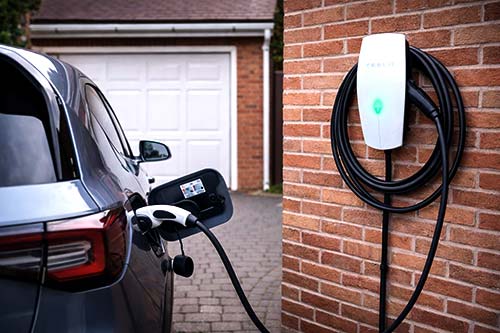
EV Charger Installation Leicester
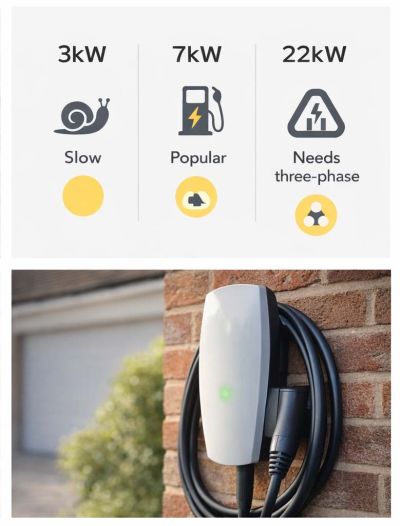
Quick answer: what is the best home EV charger setup?
For most UK homes, a professionally installed 7kW home EV charger is the most practical option. It is faster and safer than using a 3-pin plug, works well for overnight charging, and can usually be fitted on a driveway wall, garage wall or suitable parking area after a site survey.
TL;DR
Home EV Charger Installation Guide – What we cover:
- This home EV charger installation guide is written for homeowners who want to understand their options before booking a professional installation.
- 7kW home chargers are the most common choice for UK homes, offering a practical balance of charging speed and compatibility.
- 22kW chargers usually require three-phase power, which most homes do not have.
- The best place to install a home EV charger is usually near the driveway or regular parking space, with a safe cable route and easy access.
- Using an OZEV-approved installer helps with compliance, correct installation and certain grant-related requirements.
- This guide answers common homeowner questions, then points you to the next step if you want a professional installation.
Want to understand pricing before booking? Read our guide: How Much Does EV Charger Installation Cost in Leicester?
Contents
- What is a home EV charger?
- Home EV charger power explained: 3kW vs 7kW vs 22kW
- Best place to install a home EV charger
- Do I need an OZEV-approved installer?
- Home EV charger grants: what to know
- What does a professional home EV charger installation include?
- Home EV charger installation FAQs
- Next steps: book a professional EV charger installation
What is a Home EV Charger?
A home EV charger, also called a charging point, is a dedicated unit installed on an outside wall, garage wall or suitable parking area so you can charge your electric vehicle safely at home. A professionally fitted charger is usually much faster, safer and more convenient than relying on a standard 3-pin plug.
3-pin plug charging
- Slow charging speed
- Best kept as a backup option
- Not ideal as your main everyday charging solution
Dedicated home EV charger
- Faster, safer and designed for regular charging
- Usually smart-enabled for timers, schedules and off-peak charging
- Professionally installed with the correct protection and testing
If you want a professional home charger installed locally, see our dedicated service page: EV charger installation in Leicester.
Home EV Charger Power Explained: 3kW vs 7kW vs 22kW
The “kW” rating, or kilowatts, describes the charger’s power output. Higher kW can mean faster charging, but the best home EV charger depends on your property’s electrical supply, your vehicle and how you normally charge.
3kW
Very slow. This is often what people mean when charging from a standard plug. It can work in emergencies, but it is not ideal for everyday use.
7kW Home Charger
The most common choice for UK homes. It is usually suitable for overnight charging and works well for most residential setups.
22kW
Usually requires three-phase power, which most homes do not have. This is more common in commercial settings.
Tip: Even if a charger is rated higher, your car and electrical supply may limit the actual charging speed. A quick survey helps confirm the best option.
For help choosing the right charger for your home, our installation page explains the process and next steps: EV charger installation in Leicester.
Best Place to Install a Home EV Charger
 The best place to install a home EV charger is usually the location that makes daily charging simple and safe. A good installation should allow for a short cable run, tidy access, and a sensible route back to your consumer unit. For many homes, the most common options are:
- Driveway wall: often the most practical option, with easy access and clean cable management.
- Garage install: protected from weather and useful if the garage is close to the parking area.
- Side wall near parking: a good option when the front of the property is not suitable.
- Lighting and access: helpful for safe charging at night and in poor weather.
A proper installation will also consider protection, earthing arrangements, cable routing and safe access, so the charger is practical to use and does not create a trip hazard around your parking area.
Do I Need an OZEV-Approved Installer?
Not every home EV charger installation requires OZEV approval, but using an OZEV-approved installer is a strong sign that your installer understands compliant EV charger work, correct documentation and recognised installation standards. Some grant-related work may also require an approved installer.
When choosing an installer, look for someone who understands charger selection, cable routes, earthing arrangements, testing and certification. If you are considering a professional installation, contact Voltex for advice and a free quote.
Why it matters
- Compliance and documentation
- Correct selection of protection and setup
- Reassurance you are using a recognised installer
Good for grants
Some grant schemes require an OZEV-approved installer. If grants apply to your situation, OZEV approval helps keep everything aligned.
For the installation process and to book in, visit: EV charger installation in Leicester.
Home EV Charger Grants: What to Know
EV charger grants and schemes can change over time and often apply to specific situations, such as flats, landlords, rental properties or workplaces. The most sensible approach is to treat grants as a possible bonus rather than the main reason to install a charger.
Grant rules can change, so it is always worth checking the latest eligibility before assuming a grant will apply.
- Some grants are aimed at landlords or rental properties.
- Some are designed for flats or shared parking.
- Workplace charging schemes can apply for businesses.
If you want to know what may apply to your property, the best starting point is a quick chat and a survey. The charger setup should be chosen for safety, convenience and suitability first, then any relevant scheme can be checked afterwards.
Next step: EV charger installation in Leicester.
What Does a Professional Home EV Charger Installation Include?
A professional home EV charger installation is more than simply fixing a charger to the wall. The installer should check your electrical setup, agree a safe cable route, fit the charger securely, test the installation and explain how to use it before handover.
Before installation
- Property and parking setup reviewed
- Consumer unit and supply checked
- Charger location and cable route agreed
- Any upgrade requirements explained clearly
During and after installation
- Charger fitted safely and neatly
- Electrical protection and earthing considered
- Testing and commissioning completed
- App setup, handover and documentation provided where required
For a local installation quote, visit our service page: EV charger installation in Leicester.
Home EV Charger Installation FAQs
-
How much does it cost to install a home EV charger?
The cost depends on your property setup and the charger model. Key factors include cable run length, whether any consumer unit upgrades are needed, and the location of the installation, such as a driveway wall or garage. The quickest way to get an accurate price is a short survey and a clear quote.
-
Which is better, a 3kW or 7kW home charger?
For most UK homes, 7kW is the best everyday option because it provides a practical charging speed for overnight top-ups. 3kW is generally what you get from slower plug-based charging and is better as a backup.
-
Can a normal electrician install an EV charger?
EV charger installation needs the right experience and correct safety protections. A qualified electrician can install chargers, but it is best to use an installer who regularly fits EV charge points and understands the correct setup, testing and documentation. An OZEV-approved installer is a strong indicator of this.
-
Should I charge my EV to 80% every night?
Many EV owners follow the 80% approach for everyday use because it can help long-term battery health. Your vehicle settings usually let you cap charging at 80% and schedule it for off-peak hours. For long trips, you can charge higher when needed.
-
Can I install a 22kW charger at home?
Usually only if your home has three-phase power, which most UK properties do not. Even then, your vehicle must support 22kW AC charging to take full advantage. For most homes, 7kW is the practical choice.
-
How do people with no driveway charge their EV?
If you do not have off-street parking, options include nearby public chargers, workplace charging, or solutions designed for flats and shared parking areas. Some properties may be suitable for managed cable routes or dedicated bays, depending on the setup.
Ready to get your charger installed? Visit: EV charger installation in Leicester.
Next Steps: Book a Professional EV Charger Installation
The best way to get this sorted is a quick discussion about your car, your parking setup and where you would like the charger fitted. From there, we can confirm the most suitable charger option and provide a clear quote.
- Tell us your vehicle and where you park.
- We confirm the best charger power, which is usually 7kW for homes.
- We agree the installation location and tidy cable route.
- Installation and commissioning are completed with the correct documentation.